
Corrupted Flash Drive? Here’s How to Fix It — and What to Do If You Can’t.
Request a Free Estimate from Data Savers LLC Today!

A corrupted flash drive can feel like a disaster — especially when important files are at stake. The good news is that there are a few troubleshooting steps worth trying before assuming the worst. Data Savers LLC will walk you through them, and if they do not work, our team of flash drive data recovery specialists has over 25 years of experience getting data back from corrupted drives.
Tried the Fixes and Still Not Working? We Can Recover Your Data.
If the troubleshooting steps below do not resolve the corruption, your flash drive may need professional data recovery. Reach out to Data Savers LLC today for a free, no-obligation estimate.
Don’t See Your Situation Listed?
Flash drive corruption can happen in many different ways and present many different symptoms. If your specific situation is not described here, do not worry — Data Savers LLC has over 25 years of experience with corrupted flash drive recovery of all kinds. Reach out and let us assess your case.
What Is File Corruption?
Every file stored on a flash drive is made up of three core components — a file structure, metadata that describes the file, and the actual content of the file itself. When all three components are intact and accurate, the file functions normally. When any of these components are damaged, missing, or inaccurate, the file becomes corrupted — and your computer can no longer read it properly.
Corrupted files often refuse to open at all. When they do open, they typically display unintelligible errors or scrambled content. In most cases, file corruption is self-contained — meaning a corrupted file on your flash drive does not necessarily indicate a problem with your computer or other files on the drive.
Corruption can be caused by physically damaging the flash drive such as dropping it, bending it, or exposing it to water, removing the flash drive from a computer without safely ejecting it first, power interruptions during a file transfer, malware or virus infection, aging NAND flash memory that has reached the end of its write cycle limit, or file system errors caused by software conflicts or operating system crashes.
Free Estimates and No Recovery No Charge
If troubleshooting does not resolve the corruption and professional recovery is needed, Data Savers LLC is here to help. Every case starts with a free, no-obligation estimate — and if we are unable to recover your data, you will not be charged. No recovery, no fee — a standard we have upheld for over 25 years.
How to Fix a Corrupted Flash Drive
Work through these fixes in order. If one resolves the issue, great — if not, move on to the next.
Fix 1 — Try a Different USB Port or Computer
Before diving into software fixes, rule out the simplest possibility first. Try plugging the flash drive into a different USB port on your computer, or try it on an entirely different computer. Sometimes what appears to be flash drive corruption is actually a port issue or a driver conflict specific to one machine. If the drive works normally on another computer, the problem is likely with your USB drivers rather than the drive itself. If the drive shows the same corruption on every computer you try, the issue is with the drive itself.
Fix 2 — Fix Corruption via Disk Management
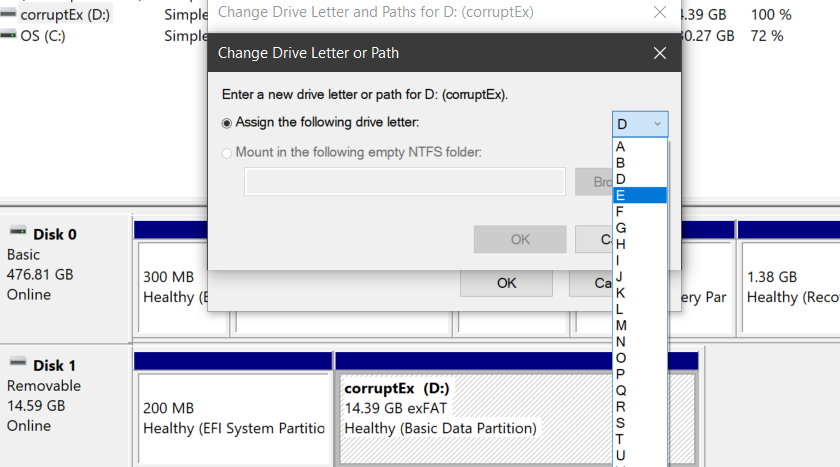
Disk Management is a built-in Windows tool that allows you to manage your storage devices. Changing the drive letter assigned to your flash drive can sometimes resolve recognition and corruption issues. Right-click the Start icon and choose Disk Management, find your corrupted flash drive in the list, right-click on it and choose Change Drive Letter and Paths, click Change and select a different letter from the dropdown menu, click OK to confirm, then safely eject the drive, remove it, and reinsert it to check whether the corruption issue has resolved.
Fix 3 — Update Your USB Driver via Device Manager
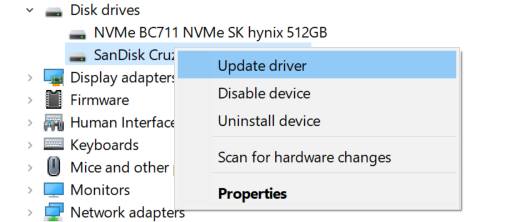
Outdated, missing, or corrupted device drivers can cause your computer to misread data from a flash drive resulting in apparent corruption. Right-click the Start icon and choose Device Manager, expand the Disk Drives section, find your flash drive in the list and right-click on it, select Update Driver, follow the on-screen prompts to search for and install any available driver updates, then safely eject the drive, remove it, and reinsert it to check whether the corruption issue has resolved.
Fix 4 — Format the Drive (Last Resort — Only If Data Is Not Important)
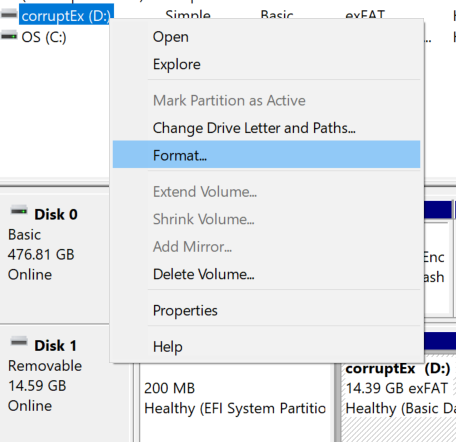
Warning — this will permanently erase all data on the drive. Only proceed if you are certain the data on the flash drive is not important and does not need to be recovered. If the above fixes have not worked and you simply want to restore the flash drive to a usable state, and you do not need any of the data on it, formatting is an option. Right-click the Start icon and choose Disk Management, find the corrupted flash drive and right-click on it and choose Format, select a file system from the dropdown menu such as NTFS for Windows or exFAT for cross-platform use, click OK, a warning will appear confirming that all data will be erased, click OK only if you are certain, then eject, remove, and reinsert the drive to confirm it is now functioning. Do not format the drive if there is any chance you may want to recover data from it. Formatting can overwrite the data on the drive and reduce or eliminate the chances of a successful recovery.
When Troubleshooting Doesn’t Work
If you have worked through every fix above and the flash drive is still corrupted, it is safe to conclude that the problem cannot be resolved without professional assistance. At this point your options depend on how important the data on the drive is.
If the data is not critical, formatting the drive as described in Fix 4 above will give you a functional flash drive but all data will be permanently erased. If the data is important, do not format the drive and do not make further attempts to repair it yourself. Every additional action taken on a corrupted flash drive without professional guidance risks reducing the amount of data that can be recovered. Contact Data Savers LLC for a professional assessment.
Flash drive data recovery is a complex procedure that many data recovery providers avoid entirely due to the technical difficulty involved. Data Savers LLC engineers have over 25 years of experience with complex flash drive recovery, including chip-level recovery from drives where the controller has failed entirely.
Why Choose Data Savers LLC for Corrupted Flash Drive Recovery?
25 Years of Flash Drive Recovery Experience — Our engineers have been recovering data from corrupted flash drives for over 25 years, including cases that other recovery providers have turned away.
Chip-Level Recovery Capability — When flash drive corruption is caused by a failed controller, standard recovery approaches will not work. Data Savers LLC engineers are equipped to perform chip-level recovery, directly accessing the NAND flash memory chips inside the drive to extract data independently of the damaged controller. This is a capability that most recovery labs simply do not have.
Class 100 ISO-5 Certified Clean Room — When flash drive recovery requires physical work on internal components, our certified clean room provides the contamination-free environment necessary for safe professional recovery.
Free Inbound Shipping — Free ground shipping for all drives within the continental USA.
No Recovery No Charge — If we cannot recover your data, you pay nothing. A commitment we have honored for over 25 years.
Still Dealing With a Corrupted Flash Drive? Let Data Savers LLC Help.
If troubleshooting has not resolved the corruption and your data is important, do not wait — contact Data Savers LLC for your free estimate today and let Atlanta’s most experienced flash drive recovery team take it from here.